
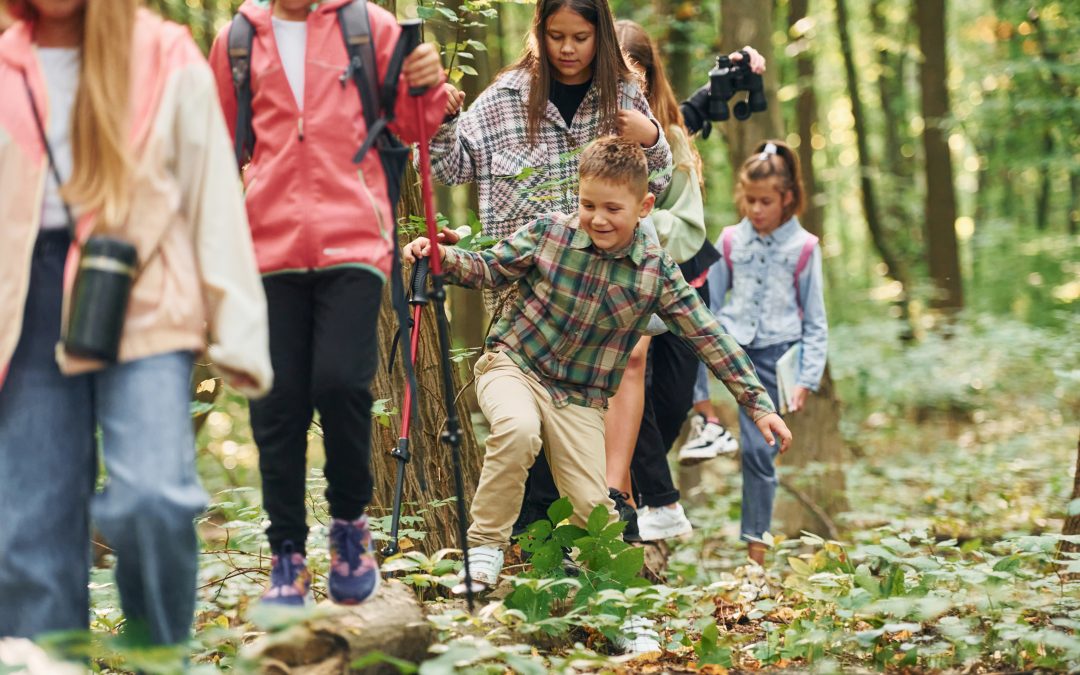
Students sit inside classrooms watching videos about watersheds while a real stream flows fifty yards from the building. Teachers describe forest ecosystems using textbook diagrams instead of walking beneath actual canopies. The disconnect frustrates educators who know that nature cannot be fully taught through screens and worksheets, yet finding the time, transportation, and curriculum alignment to get outdoors feels nearly impossible.
On April 22, 2024, Governor Wes Moore signed an Executive Order creating the Maryland Outdoor Learning Partnership to bridge that gap. The initiative connects schools directly with natural spaces across the state, making outdoor environmental education accessible rather than aspirational. Instead of treating field trips as rare exceptions, the partnership positions nature preserves, forests, and parks as regular learning environments where students engage with ecosystems firsthand.
Maryland schools and families now have a direct pathway for partnering with outdoor preserves for education, transforming how students learn about their environment. In the paragraphs ahead, you will see what this partnership actually delivers, how preserves like Serenity Ridge function as learning laboratories, and what steps educators and parents can take to make outdoor education part of the regular curriculum rather than a one-time event.
What Maryland’s Outdoor Learning Partnership Changes
The Executive Order’s Core Goals
The Executive Order establishes formal coordination between state agencies, school systems, and conservation organizations. According to the Maryland Department of Natural Resources, the partnership aims to expand access to outdoor learning experiences across all 24 school districts. It removes logistical barriers that historically prevented teachers from taking students outside, even when natural spaces existed nearby.
The partnership focuses on three primary objectives:
- Making outdoor learning accessible statewide through coordinated programming
- Connecting schools directly with existing natural spaces in their regions
- Supporting educators with curriculum resources aligned to state standards
Why Traditional Barriers Fall Away
Instead of individual teachers scrambling to arrange field trips, the partnership provides structured assistance that removes common obstacles:
- Transportation coordination helps schools reach preserves without draining limited budgets
- Curriculum materials align outdoor activities with Maryland College and Career Ready Standards
- Centralized scheduling systems simplify the process of booking preserve visits
- Shared resources reduce the planning burden that once fell entirely on individual teachers
Who Benefits Most
The partnership levels the playing field for students who previously lacked outdoor access:
- Title I schools gain nature experiences previously available only to wealthier districts
- Students in urban areas with limited green space can visit protected forests and wetlands regularly
- Teachers seeking hands-on science integration find immediate support
- Rural schools can formalize relationships with nearby preserves that they may have used informally
Why Classrooms Alone Cannot Teach Ecosystems
What Students Miss Indoors
Walk into any fifth-grade science class, and you will find posters of food webs, carbon cycles, and water systems. Students memorize vocabulary and fill in worksheets. But they miss the sensory foundation of ecological understanding:
- Temperature shifts between sunlit meadows and shaded forests
- Bird calls change from dawn to midday
- The smell of decomposing leaves in autumn
- Texture differences between oak bark and sycamore bark
- The sound of running water in a stream versus a wetland
- Visual scale of a 100-foot canopy versus a classroom poster
Indoor instruction simply cannot provide these experiences, yet they form the foundation students need to truly comprehend how ecosystems function.
Research on Outdoor Learning Outcomes
A North American Association for Environmental Education study found that outdoor learning improved student engagement, critical thinking, and environmental stewardship attitudes. Students who spent regular time in natural settings demonstrated stronger observation skills and better retention of complex concepts compared to peers who learned exclusively indoors. The difference was significant enough to influence academic outcomes over time.
The benefits extend across multiple areas:
- Improved academic performance in science and math
- Enhanced critical thinking and problem-solving abilities
- Stronger environmental stewardship attitudes
- Better social and emotional development
- Increased physical activity and health outcomes
Real-time observation teaches lessons that textbooks cannot replicate. Students watching a woodpecker excavate a tree witness adaptation in action. When they return weeks later and find the cavity occupied by a nuthatch, they understand succession and habitat relationships without needing diagrams or definitions.
How Nature Preserves Serve as Learning Laboratories
Living Curriculum on the Trail
Forests demonstrate a living curriculum on every trail. Walk through a preserve in early spring, and students observe wildflowers blooming before tree leaves emerge. Ask them why, and they begin thinking about sunlight, timing, and competition. Return in summer, and the forest floor looks completely different. The same trail becomes a lesson in seasonal adaptation.
Each habitat type offers distinct learning opportunities:
- Forests reveal succession, decomposition, and canopy structure
- Wetlands demonstrate water filtration and complex food webs
- Streams show erosion, water quality, and aquatic ecosystems
- Meadows illustrate pollinator relationships and seasonal plant cycles
- Trail edges expose how different habitats interact and transition
What Makes Preserves Effective Classrooms
Three factors make nature preserves particularly effective as outdoor classrooms. Protected habitats ensure that observation sites remain consistent year after year. Students can track the same vernal pool, the same oak grove, the same bird nesting area across multiple seasons and even multiple school years.
Key advantages include:
- Trained naturalists provide expert guidance and help students notice critical details
- Manageable scale allows meaningful engagement without overwhelming vastness
- Protected status ensures habitats remain available for future student groups
- Established trail systems make navigation safe and predictable
- Seasonal reliability lets teachers plan curriculum around observable phenomena
Beyond Single-Visit Field Trips
The most powerful learning happens when students move beyond single-visit field trips. Multi-visit programs allow them to track changes over time. They notice when invasive species spread, when native plants recover after removal efforts, or when wildlife populations shift.
Repeated engagement creates deeper outcomes:
- Students collect data that managers actually use
- They participate in planting native species or removing invasives
- Observation transforms into active stewardship
- Authentic relationships develop with specific places
- Conservation becomes personal rather than abstract
This shift from visitor to participant changes how students see their role in the natural world. They stop being passive observers and start becoming contributors.
What Serenity Ridge Offers Maryland Educators
Habitat Diversity on an Accessible Scale
Serenity Ridge Nature Preserve and Arboretum sits on 97 acres in Baltimore County, within the Piedmont Plateau region. The property includes mature hardwood forests, thriving wetlands, meandering streams, and open meadows. This habitat diversity means educators can address multiple ecosystem concepts in a single location without the work of coordinating visits to different sites.
Available learning environments include:
- Mature hardwood forests for canopy structure and tree identification
- Wetland areas for water quality testing and amphibian observation
- Stream corridors for erosion study and aquatic ecosystem analysis
- Developing an arboretum showcasing more than 100 native Maryland species
- Meadow habitats for pollinator observation and plant succession studies
Programs Aligned with Learning Standards
Programs align directly with Maryland College and Career Ready Standards, particularly in science and environmental literacy. Elementary students engage in sensory work and basic species identification. They learn to distinguish oak from maple, cardinal calls from chickadee songs, and amphibian habitats from reptile preferences.
Curriculum connections by grade level:
- Elementary focus on sensory work, species identification, and habitat basics
- Middle school emphasizes ecological relationships, data collection, and scientific methods
- High school programs include conservation planning, restoration projects, and authentic research
- All levels integrate observation skills, journaling, and evidence-based thinking
The preserve also supports integration with social studies and language arts. Students write field journals, research Maryland history connected to land use, and examine how human communities interact with natural systems.
Support for Different Age Groups
The preserve staff understands that different age groups need different approaches. Young children thrive on wonder and questions. Older students want detail and authentic science practice. Programs adapt accordingly, meeting students where they are developmentally while stretching their understanding.
Age-appropriate programming ensures engagement:
- Younger students learn through games, stories, and guided observation
- Middle grades balance structured learning with independent observation
- High schoolers participate in citizen science projects and real conservation work
- All programs adapt pacing and detail to developmental readiness
How Schools Begin Partnering with Preserves
Initial Planning Steps
Starting a partnership requires surprisingly few steps. Educators begin by identifying how outdoor learning fits their existing curriculum goals rather than treating it as an addition.
The process typically follows these steps:
- Contact the preserve’s education coordinator to discuss goals and timing
- Review available program offerings and alignment with curriculum units
- Identify which standards and learning objectives each program addresses
- Schedule an initial planning meeting to discuss logistics and expectations
- Determine whether single visits or multi-visit programs best serve learning goals
Many educators find that reaching out early in the school year, even if visits will not happen until spring, allows better planning and integration with existing units.
What Teachers Should Prepare
Preparation before the visit makes the difference between a memorable field trip and a transformative learning experience. Students need context before they arrive.
Effective preparation includes:
- Classroom lessons introducing key concepts and vocabulary before the visit
- Student-generated questions they want to investigate outdoors
- Observation journals or data collection sheets aligned to learning goals
- Clear behavioral expectations for outdoor environments
- Activities that extend learning back into the classroom afterward
Strong outdoor education does not happen spontaneously. It builds on classroom learning and extends back into the classroom afterward. The best programs treat the preserve visit as the middle chapter of a larger learning story.
Logistics That Matter
Group size affects the experience dramatically. Smaller groups allow closer observation and more questions. Clear communication about practical details prevents frustration and ensures successful visits.
Key logistical considerations:
- Transportation coordination, including pickup and drop-off locations
- Group size limits and required adult supervision ratios
- Weather contingencies and indoor backup programming options
- Required equipment like water bottles, appropriate footwear, and layers
- Accessibility needs for students with mobility or sensory considerations
- Emergency procedures and first aid protocols
Most preserves provide detailed information packets before visits that address these logistics. Teachers who read and share this information with chaperones avoid common problems on the day of the visit.
Why Families Should Access These Resources Too
Weekend Programs for All Ages
The partnership is not limited to schools. Families can access many of the same resources through weekend programs and community events, often at little or no cost.
Family-friendly options include:
- Guided nature walks suitable for all ages and fitness levels
- Seasonal festivals celebrating ecological milestones like migration or leaf emergence
- Volunteer opportunities where children work alongside adults on restoration projects
- Programs requiring no advance registration
- Special events tied to natural phenomena like owl calls or firefly emergence
These programs remove the pressure of formal education while still building environmental literacy. Parents and children learn together, asking questions and making observations at their own pace.
Homeschool and Informal Learning
Homeschool families find particular value in preserve partnerships. They can schedule visits during weekdays when trails are quieter, and the preserve staff have more time for questions.
Flexible learning opportunities:
- Weekday scheduling when preserves are less crowded
- Independent visits using preserved maps and interpretive materials
- Multi-visit memberships make regular access affordable
- Educational resources designed for parent-led learning
- Connection to broader homeschool networks using outdoor education
Weekend visits also serve families whose children attend schools without strong outdoor education programs. A monthly family hike builds observation skills, seasonal awareness, and appreciation for local ecosystems. Parents can fill gaps by providing nature experiences directly, using preserve resources to supplement what schools cannot offer.
What Happens When Students Return Repeatedly
Single visits provide snapshots. Multiple visits reveal processes. A student who walks the same trail in March, May, September, and November witnesses the full cycle of seasonal change rather than isolated moments.
Repeated visits create a layered understanding:
- Students see which plants emerge first in spring and which pollinators arrive when
- They observe how autumn colors progress across different tree species
- They learn what remains visible through winter and what disappears
- They notice variations in timing and abundance from year to year
- They recognize individual trees and anticipate seasonal milestones
Students who return repeatedly start noticing details they missed initially. They remember which spots flood after heavy rain and which stay dry. This familiarity breeds investment. When students know a place intimately, they care about its future.
Some students form lasting relationships with specific habitats:
- They adopt monitoring sites and track changes over time
- They document seasonal shifts through journals and photographs
- They contribute observations to citizen science databases
- They return as volunteers even after formal programs end
- They bring family members to share places they love
Conservation becomes personal rather than abstract. These students do not just understand ecosystems intellectually. They feel connected to particular places and species in ways that shape their choices and values.
Conclusion
Maryland’s Outdoor Learning Partnership removes obstacles that once kept students inside when the best learning waited outdoors. By connecting schools with preserves like Serenity Ridge, the initiative makes environmental education tangible, memorable, and woven into the regular curriculum. Students stop reading about ecosystems and start observing them, tracking them, and caring about their future.
Educators and families now have an open door to spaces designed for exactly this purpose. Whether through coordinated school programs or weekend family visits, partnering with nature preserves transforms abstract concepts into lived experience. The forest becomes a classroom. The wetland becomes a laboratory. And students carry that connection forward long after they leave the trail.